Aquarium Filtration
The most important part of any aquarium setup is the type of aquarium
filtration you choose
to use.
Aquarium filtration is the means you employ to remove the waste products
of the fish and other
creatures in your aquarium. It is important to understand what aquarium
filtration is and what it can
and cannot do for your aquarium. Proper aquarium filtration will remove
toxic substances and medication from your aquarium water. Filtration can
not replenish essential elements and amino acids to the water and can
not stabilize water chemistry. Fish do not come from stagnant pools of
water but rather from streams, rivers, lakes and oceans. A lot of the
essential elements that fishes bodies need, come from the water they live in.
Regular water changes are the best way to replenish the essential
elements and stabilize the water chemistry regardless of the form of
filtration you planning to use for your aquarium.
Types Of Aquarium Filtration
Modern aquarium filtration can be divided into three basic types : Mechanical filtration, Biological filtration, and Chemical filtration.Mechanical filtration is the physical process of removing larger particulate matter from the water column. Common mechanical filtration sources may include: filter floss, foam inserts, and diatomaceous earth. It is important to rinse out mechanical filter media and replace as necessary. In most filter systems mechanical filtration is employed first before the water goes through the biological filter. This helps prevent the biological filter media from becoming clogged with particular matter which will reduce the biological filters surface area.
Biological filter media provides a large surface area for live beneficial bacteria (nitrosommonas and nitrobacter) to cling to. Beneficial bacteria can then break down waste products such as ammonia and nitrite which come from decomposing organic matter like fish waste. Ammonia and nitrites are toxic to fish and levels above zero can be considered potentially deadly. The actions of beneficial bacteria keeps your water clear and habitable for fish. Beneficial bacteria is essential to keeping fish alive in any aquarium. Chemical filtration employs chemical media to absorb gases, heavy metals and other foreign materials from the water. The most common type of chemical filtration used in aquariums is carbon. Carbon removes fish odors and discoloration from your water and will also remove medication. Another common type of chemical filtration is phosphate remover. Phosphate remover will absorb phosphate from your water which is the leading cause of pest algae. These types of contaminants cannot be removed with biological filtration or mechanical filtration.
With an understanding of the three basic filter concepts we can move on to water flow. It is important to have water movement in your aquarium for several reasons. Moving the water around in the aquarium improves gas exchange by exposing more of the water to the surface air. This allows carbon dioxide to be exchanged for oxygen. Oxygen is important for the fish so that hey don't suffocate and also for the beneficial bacteria we want to grow in the filter. With increased oxygen levels, bacteria's and enzymes can also break down the fish waste that accumulates in the gravel. With the aquarium filter providing proper circulation particulate matter can be picked up by the filter and removed. For freshwater aquariums you want to turn over the total volume of the aquarium through the filter three to 10 times per hour.
Example: 100 gallon aquarium turned over five times would be 500 gallons per hour.
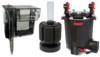
Hang-On Filters
Hang-On filters hang on the back or side of the tank. These filters come in
various sizes ranging for aquaria from 5 gallons to 60 gallons. They
draw water from the tank through an intake tube with a strainer attached
to the end up into the filter box and passes the water
though a mechanical filter (typically a porous foam sponge).
The sponge
doubles as a biological filter. An internal pump then returns the filtered
water into the aquarium. These power filters come in many sizes suited for
small to large aquariums. The foam sponge can be easily inspected for clogging or
removed for cleaning.
INTERNAL FILTERS
The internal power filter is probably the most widely used type of
filter and they are available in a wide range of sizes from micro
filters, suitable for very small tanks of 18" (45cm) or less, up to
large units capable of filtering tanks of 100 gallons (500 litres) or
more. The typical internal power filter is a plastic box with slits in
the bottom and sides, filled with a sponge media and attached to the
pump unit. They are normally attached to the aquarium wall using rubber
suckers. When the pump is switched on, tank water is drawn through the
sponge media where it is filtered and then pumped back into the
aquarium. When placing a filter in the aquarium it is a good idea to
situate the filter in such a way that the outlet of the filter is close
to or above the water surface. Oxygen exchange only occurs at this
level, so ensuring there is always movement increases oxygen levels in
the water.
Some internal filters come with a space inside the filter chamber
where activated carbon can be placed to add an additional level of
filtration.
Canister Aquarium Filters
One of the more expensive but most effective methods of filtering aquarium water
is an external canister filter. These are purpose built containers of different
filter media through which water is pumped through before being returned to the
aquarium. They have a large volume enabling them to process more water than the
smaller surface inside internal power filters.If you look inside a canister filter you will notice that the filter media sits in different trays on top of each other. Water trickles through each stage to first remove particles such as fish food and solid waste. The further stages use microbes to clean the water of the ammonia. It is broken down into safer waste products which are more easily dealt with by fish. The trickling movement of the water also helps to enrich it with oxygen which helps the microorganisms complete their work.
The media used will vary but it mainly comes down to personal preference. Ceramic rings or tubes and bio balls are designed to be cleaned and reused if they become so dirty as to not let water pass through them. Other canister filter media such as charcoal or filter wool is usually disposed of after a period of use.
Completely cleaning a canister filter should be avoided. Instead change the different mediums one at a time, perhaps a month apart. This will allow a population of beneficial bacteria to always be thriving and ready to clean. When you do clean any bio balls or ceramic media use water from the aquarium so that the useful bacteria are not completely destroyed. Sometimes the canister filter's pump will also require attention if it becomes noisier or ceases movement completely. Rinsing it under some warm water and removing any built up slime should remedy the problem. With these simple maintenance procedures your canister filtration system should give you years of trouble free use.